


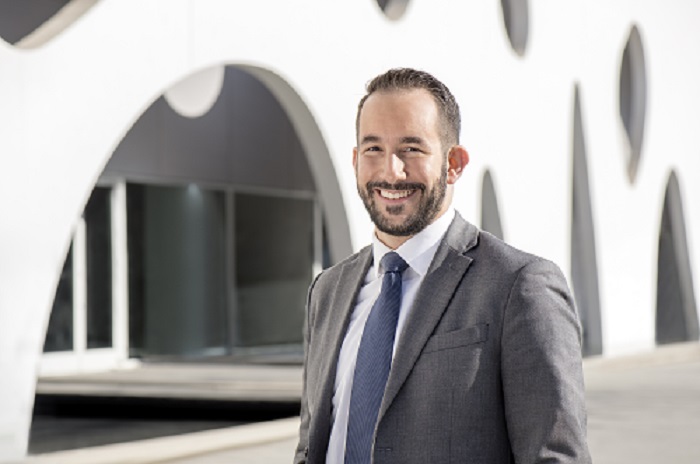
The food industry faces the challenge of producing more efficiently and sustainably and, at the same time, responding to a consumer who demands products that are increasingly adapted to their needs and ideology. Digitalisation, automation and AI work together in this conjunction of interests. From 6 to 8 October, Alimentaria FoodTech will bring together at Fira de Barcelona the main companies that decide how we are going to feed ourselves in the increasingly near future. Its director, Ricardo Márquez, explains this.
What are the main technological challenges facing food production and processing companies today?
The great challenge is to produce more efficiently, sustainably and competitively and, at the same time, to respond to an increasingly demanding consumer. We are talking about consumers who are looking for products adapted to their tastes, nutritional needs, intolerances, preferences and even ideology. To respond to this diversity of interests, the industry needs more agile and flexible production lines, capable of adapting quickly to market changes without compromising quality or safety.
What technologies are transforming food production plants the fastest?
At Alimentaria FoodTech we will see examples of how automation, AI and data analytics are already having an impact on issues as relevant as productivity, traceability or food safety. Specifically, artificial intelligence opens up many possibilities to make better use of the enormous amount of data generated by the industry. It can help to optimise processes, anticipate incidents and improve decision-making.
At what point is the digitalization of the food technology industry and what barriers continue to slow down its progress?
Digitalisation is advancing in different areas of the production chain. Today it makes it possible to automate machinery, connect processes, generate historical information and improve traceability, as well as incorporating tools such as artificial intelligence or digital twins. The challenge is to continue extending these solutions to the industry as a whole and to achieve increasingly connected, agile and flexible production chains.
In a context of cost pressure and the need to gain efficiency, what role does technological innovation play in the competitiveness of food production companies?
This is a fundamental factor. Technology makes it possible to optimise the use of raw materials, reduce bottlenecks, automate processes and make better use of resources. All this helps to produce more efficiently and to gain adaptability, two aspects that are particularly important for maintaining the competitiveness and profitability of companies.
Which technologies are arousing the most interest among companies in the sector?
There is a lot of interest in everything related to digitalisation, automation and artificial intelligence applied to production processes, but also in new preservation technologies, new packaging materials and solutions that make it possible to make better use of raw materials and resources. At Alimentaria FoodTech we will see precisely how these technologies are evolving and what applications they can have in the industry. The fair itself will devote special attention to AI, data analytics, automation, food safety and new materials, among other areas.
What will the industry find at Alimentaria FoodTech 2026 to respond to these challenges?
From 6 to 8 October, Alimentaria FoodTech will bring together more than 350 exhibiting companies from more than 20 countries, which will present the latest innovations in machinery, technology and ingredients.
In addition, more than 80 experts will address issues such as digitalisation, artificial intelligence, food safety, sustainability and new ingredients, and some thirty startups will show disruptive solutions. We want the fair to be a meeting point where the industry can learn about technologies that are already responding to many of its main challenges.
Barcelona, September 17th 2026
